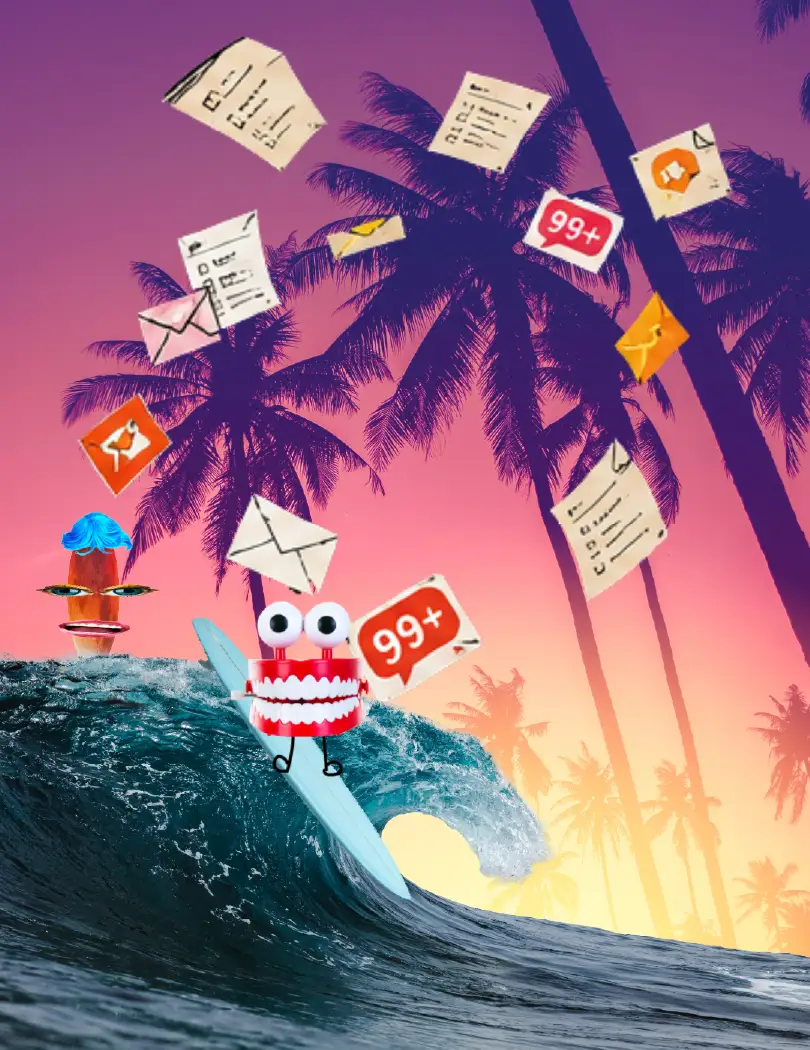

Welcome to your digital eviction notice

You've spent three years building your social media following. Thousands of followers. Hundreds of posts. A modest collection of videos you're still slightly embarrassed about.

You've shown up consistently, entertained strangers and answered questions from people who could absolutely have Googled them. You've done everything you're supposed to do.

Then one morning, your engagement falls off a cliff. Apparently, the algorithm has decided your content is no longer terribly interesting.

No warning. No explanation. No opportunity to appeal to the landlord. Just a digital eviction notice and a suspicious-looking drop in reach.

Welcome to the wonderful world of building your business on someone else's property.

You've built a lovely house. Unfortunately, you're renting.

Social media is a fantastic way to get discovered. Instagram, LinkedIn, TikTok and Facebook can introduce your business to people who might never have found you otherwise. That's valuable, especially when you're using organic marketing to grow without relying entirely on paid advertising.

But here's the catch: having followers doesn't mean you can reliably reach them.

Platforms decide which posts appear in people's feeds, how content is recommended and what gets prioritised. Those decisions can change.

A format that performs brilliantly today might struggle next month. A sensible post might reach a fraction of your followers. An account can be restricted, suspended or lost. And no, shouting at your analytics dashboard doesn't usually help.

Social media is rented attention. You can build something wonderful there, but somebody else still controls the front door. And occasionally rearranges the furniture while you're asleep.


Why your business needs somewhere of its own

Here's an important distinction. You don't actually own an audience. They're people, not a collection of garden furniture.

What you can build is a direct relationship with your audience through channels where you have more control over how you communicate.

That might be an email list people have chosen to join, a branded community, a membership or an audience connected directly to your own platform.

These relationships still depend on people wanting to hear from you. Email providers and technology platforms have rules of their own, too. But you're no longer relying on one social media algorithm to decide whether people see your next message.

That's the real value of building an owned audience. Not ownership of people. Ownership of the systems, content and connections that support your relationships with them. Far less creepy. Considerably more useful.

Four ways to stop living at the algorithm's mercy

1. Use social media for discovery, not everything. Keep creating useful content where your potential customers spend time. Answer questions, share advice and join conversations. But don't expect every relationship to begin, develop and end in the comments section. Social media is the introduction, not the entire relationship.

2. Give interested people somewhere useful to go. Can they find a detailed guide, visit your website, subscribe to something worthwhile or join a relevant community? A garden designer sharing pruning tips could offer a seasonal planting guide. The visitor gets something useful, and the business gains a chance to build a direct relationship if they choose to subscribe. Everybody wins. Except the weeds.

3. Make staying worth their while. Getting an email address isn't the finish line. If a welcome message is followed by fourteen sales emails and an unnecessary discovery call, you've missed the point. A good inbound marketing strategy gives people relevant reasons to keep engaging. Communicate when you have something worth receiving.

4. Spread your discovery opportunities. Relying entirely on one platform creates unnecessary risk. Search-friendly articles, website resources, customer recommendations, partnerships, community discussions and earned media can all help people discover you. The goal isn't to be everywhere; it's to build several relevant routes into your business, rather than hoping one algorithm stays in a good mood.

Because that's an expensive amount of faith to place in something that once recommended you a video of a man pressure-washing a potato.

Organic marketing should build something that lasts

Here's where a connected organic marketing strategy becomes valuable. Imagine you publish a helpful article answering a question your customers ask.

That article could attract visitors through Google. You could adapt it into social posts, use it in a newsletter and share it in relevant communities.

Someone discovers your advice through LinkedIn. They visit your website, explore a related resource and choose to join your community. Over time, they read more of your content, ask a question and eventually become a customer.

The original discovery happened on somebody else's platform. But the relationship didn't have to stay there. That's the difference between collecting attention and building a marketing asset.

A good article can continue attracting visitors. A useful resource can help build an audience. A community can create conversations. An email list can offer a direct route back to interested people. None guarantees sales, but each can contribute to a more resilient marketing operation.

The clever bit is making them work together.

Stop measuring the landlord's approval

Follower counts, likes and reach can tell you whether your social content is attracting attention. Useful information, certainly. But if you're building a business, measure what happens beyond the platform too.

How many people visit your website? How many choose to subscribe? Do they return? Are community members participating? Are enquiries and sales developing from those relationships?

Website analytics, tagged links and conversion measurements can help you understand which discovery channels contribute to meaningful actions. And look for trends over time.

A post with modest engagement that brings ten interested people into your audience might be more commercially valuable than a viral video watched by 80,000 strangers who never return.

Even if that video features a particularly talented pigeon.

Let the algorithm introduce you. Frank Rabbit can help with the rest.

This is exactly the thinking behind Frank Rabbit: an all-in-one automated organic marketing platform designed to connect strategy, content creation, discovery, audience building, nurturing, conversion and monetisation.

Get discovered outside Frank Rabbit, where your potential customers already spend time. Then bring interested people into your own branded space, where you can cultivate relationships, build community, connect and create opportunities to sell.

Marketing automation can help organise that journey, make relevant information easier to deliver and identify useful next steps. Instead of treating every social media interaction as an isolated event, your marketing starts working as a connected system.

The aim isn't to abandon social media. It's to stop being entirely dependent on it.

Your landlord doesn't have to be your business partner

Keep using the algorithms. Make the content. Enjoy the conversations. Celebrate the occasional viral moment. Just make sure you're building something beyond the platform while you're at it.

Your website. Your useful content. Your opted-in audience. Your community. Your customer relationships. Things that continue to matter even when social media changes the rules again.

Because the algorithm can be a wonderful source of introductions. But as a landlord? Unreliable, unpredictable and absolutely impossible to get hold of when the boiler breaks.

And apparently, your rent's going up again.